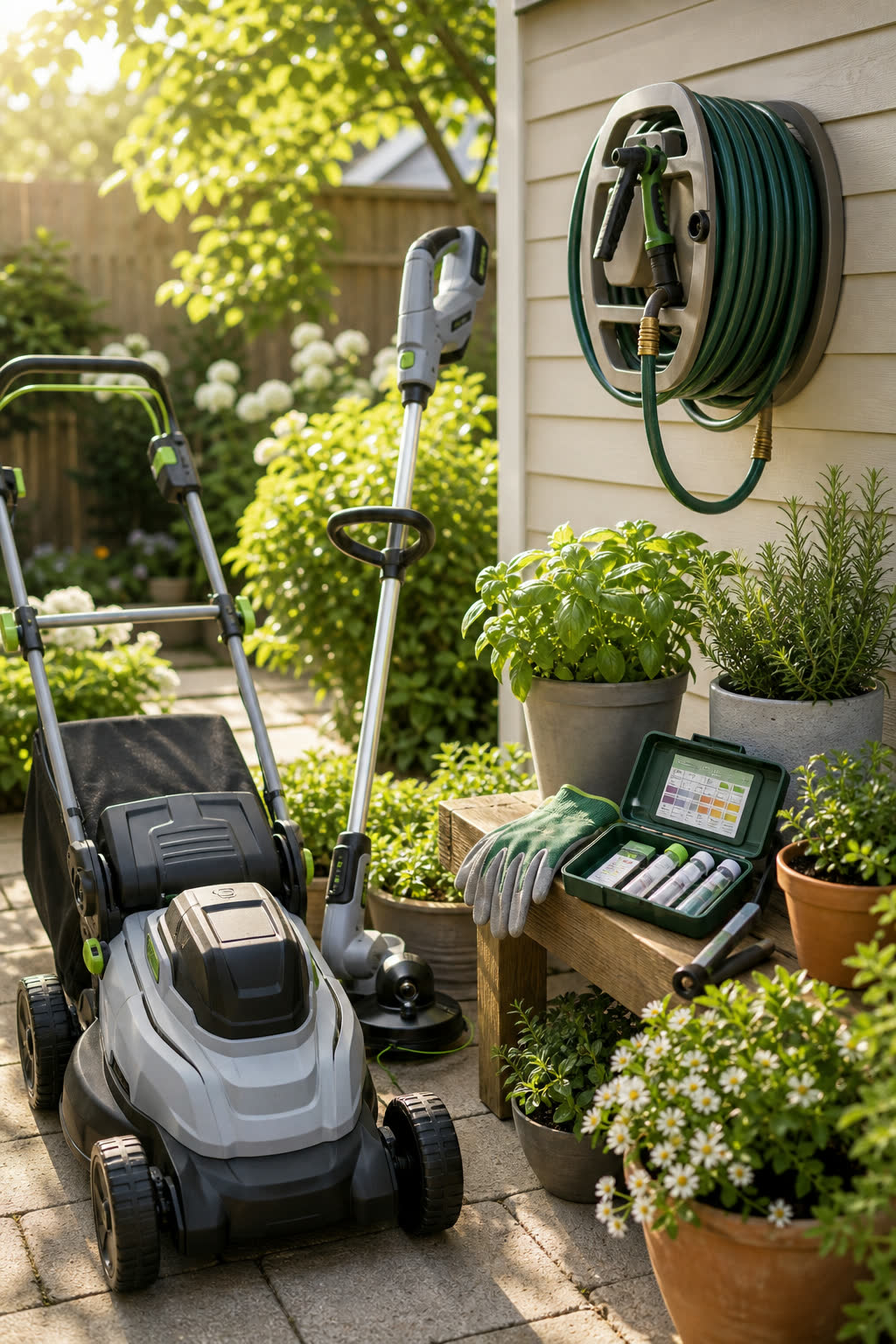
The direct answer: for a first spring cleanup, do not buy a full yard-tool set. Walk the yard for 30 minutes, separate the mess into safety stops, wet leaves, branches, weeds, grass clumps, heavy loads, and unknown plants. Buy only for the pile that repeats or blocks daily use.
Spring cleanup fails when every pile gets treated as the same job. Wet leaves behave differently from dry leaves. Thorny branches need a cutting and carrying plan. Gravel weeds may become a weekly surface problem, not a one-time hand-pulling project. Overgrown shrubs may hide access panels, utility lines, or plants worth keeping. Sort first so the tool follows the work.

Step 1: walk without tools
Take photos before cutting or bagging. Mark the doors, gates, trash pickup point, meter access, hose faucet, drain path, and the narrowest place a loaded bag or cart must pass. If you find a downed wire, hanging limb, open hole, broken glass, unstable step, active leak, or blocked exit, stop the cleanup and handle that problem first.
Do not dig out roots, set new posts, plant replacement shrubs, or remove large buried material until utility marking and local rules are clear. 811 Before You Dig tells homeowners to contact the service a few business days before common digging projects such as planting trees or shrubs.
Step 2: sort by material, not by tool
Use the table to decide whether the pile needs a rake, cutters, hauling, a rental, local disposal, or a pause. On a phone, swipe the table sideways.
| You find | First action | Buy only if | Do not do this |
|---|---|---|---|
| Wet leaves or matted corners | Wait for the surface to firm up if the lawn is soft, then rake or lift in small sections. | The same corners collect leaves every year and a narrow rake fits between plants. | Drag a heavy tarp through soft turf or smother live grass with wet piles. |
| Grass clumps after first mow | Break up thick clumps, then mow dry next time and follow the one-third rule. | Your mower cannot mulch or discharge without leaving repeated heavy piles. | Mow wet slopes or leave clumps thick enough to shade the turf. |
| Small dead stems and thorny twigs | Cut into short pieces near the plant, then move them in a bucket or cart. | The stems repeat and a bypass pruner or lopper matches the cut diameter. | Swing a chainsaw or powered cutter around loose, springy branches. |
| Large limbs, overhead work, or storm damage | Fence off the area and call a qualified tree service or local utility when wires are involved. | You are only buying gloves or marking tape for a safe boundary. | Stand on a ladder with a saw or prune near overhead utility lines. |
| Perennial weeds or gravel weeds | Identify whether the problem is isolated roots, seed heads, or a weekly surface route. | The same motion is comfortable and the tool reaches the crown or surface safely. | Assume one pull solves a deep-rooted or drive-surface problem. |
| Unknown shrubs or crowded foundation beds | Photograph the plant, locate access panels, and cut only dead, broken, or blocking material. | You know the plant, the pruning timing, and the tool diameter. | Clear everything because it looks messy in early spring. |
| Heavy bags, soil, mulch, or mixed debris | Measure the loaded route, gate, turn, slope, and storage spot. | The load repeats or exceeds what you can carry safely in small bags. | Buy a cart that fits the yard but cannot turn through the route. |
Step 3: choose buy, borrow, rent, or wait
Buying is right when the same job repeats, the tool fits storage, and the route is measured. Borrowing is right for a one-weekend pile when the borrowed item is safe and fits your property. Renting is better for high-cost, bulky, or infrequent work such as pressure washing, aeration, or heavy hauling. Waiting is correct when the area is safe but the plant, water route, or local disposal rule is unknown.
- Buy: gloves that fit, a hand cutter that matches measured stem diameter, or a small hauling option that will be used all season.
- Borrow: a second rake, tarp, or hand tool for one helper and one weekend.
- Rent: high-cost equipment that solves a one-time task and would be hard to store.
- Wait: unknown perennials, safe shrubs that may bloom, soft wet turf, and jobs that require utility marking or local pickup rules.
Compare only the role your cleanup proves
These are shopping routes, not a required kit. Pick at most one route today, and verify current dimensions, cut capacity, pickup rules, and storage before buying.
Hand protection route
Start here when the cleanup includes thorns, splinters, rough bags, or damp debris. Check finger fit, palm grip, cuff coverage, and whether the glove still lets you release a tool safely. Thin gloves may work for raking. Thorny stems usually need more coverage.
Compare: yard work glovesCompare on Amazon
Cutting route
Use hand pruners for small live or dead stems, loppers for larger reachable stems, and a pruning saw only when the branch size requires it and the work is below shoulder height. If a branch is overhead, near wires, under tension, or larger than your tool rating, stop and hire the job.
Compare: pruners and loppersCompare on Amazon
Light hauling route
Compare a garden cart only after bags or branch buckets travel more than a few steps. Measure gate width, slope, turning room, where the cart parks, and whether the debris must dump or just carry. If the route is narrow or the load is mostly mulch or soil, use the cart-versus-wheelbarrow guide before choosing.
For more detail, use the garden cart vs. wheelbarrow comparison before buying a hauler.
Compare: small garden cartsCompare on Amazon
Affiliate links. As an Amazon Associate I earn from qualifying purchases.
Common first-cleanup failures
- Buying a blower for wet leaf mats. A blower helps with light dry debris on hard surfaces. It is not a shortcut for wet, heavy, or planted-in material.
- Bagging everything. Many areas have specific yard-waste rules. Some clippings or chopped leaves can stay where they help; diseased, seedy, thorny, or regulated material may need a different path.
- Cutting shrubs before identifying them. Remove dead, broken, diseased, rubbing, or access-blocking branches first. Save full shaping until you know the plant and bloom timing.
- Creating a bigger hauling problem. A big pile at the back fence is not clean if the pickup point is at the front curb. Build piles where the final route works.
- Digging out roots without utility marking. Spring cleanup often turns into planting or shrub removal. That is a different risk category.
- Working wet slopes. Wet turf can clump, tear, and make footing worse. Shift to hard-surface cleanup or planning when the lawn is too soft.
A two-hour cleanup order for a small yard
- Walk the yard, photograph unknowns, and mark any safety stop.
- Clear the door, meter, trash, and daily walking routes.
- Separate dry leaves, wet mats, branches, weeds, clippings, and heavy loads.
- Cut reachable small branches into short pieces before hauling them.
- Break up thick grass clumps and leave light clippings when the lawn is dry enough.
- Check local yard-waste pickup, compost, or drop-off rules before filling every bag.
- Write the one tool or rental that would remove the next repeated bottleneck.
What to do after cleanup day
If the cleanup exposed repeated grass work, compare small-yard mower options before buying another cutting tool. If weeds are the recurring problem, use the weed puller vs. herbicide guide to separate taproots, surface seedlings, and herbicide limits. If bags, mulch, or branches were the hard part, use the hauler decision guide. If the yard still feels like too many projects, step back to the first-time homeowner yard-care plan.
Sources and method
This guide uses community problem signals from Permies discussions about pulling vs. chopping perennial weeds, weed strategy on gravel, and reducing branch trip hazards during chop-and-drop work, plus GardenWeb/Houzz discussions about rushing full shrub removal, matching powered tools to actual trimming jobs, and avoiding clipping piles that shade turf. These are examples of real homeowner friction, not proof that one method fits every yard.
Operational checks come from University of Minnesota Extension pruning guidance, Wisconsin Horticulture lawn-maintenance guidance, the U.S. EPA yard-trimmings summary, Oregon State Extension grass-clipping guidance, and 811 Before You Dig. Product details change, so verify dimensions, tool ratings, safety instructions, and local disposal rules before buying.