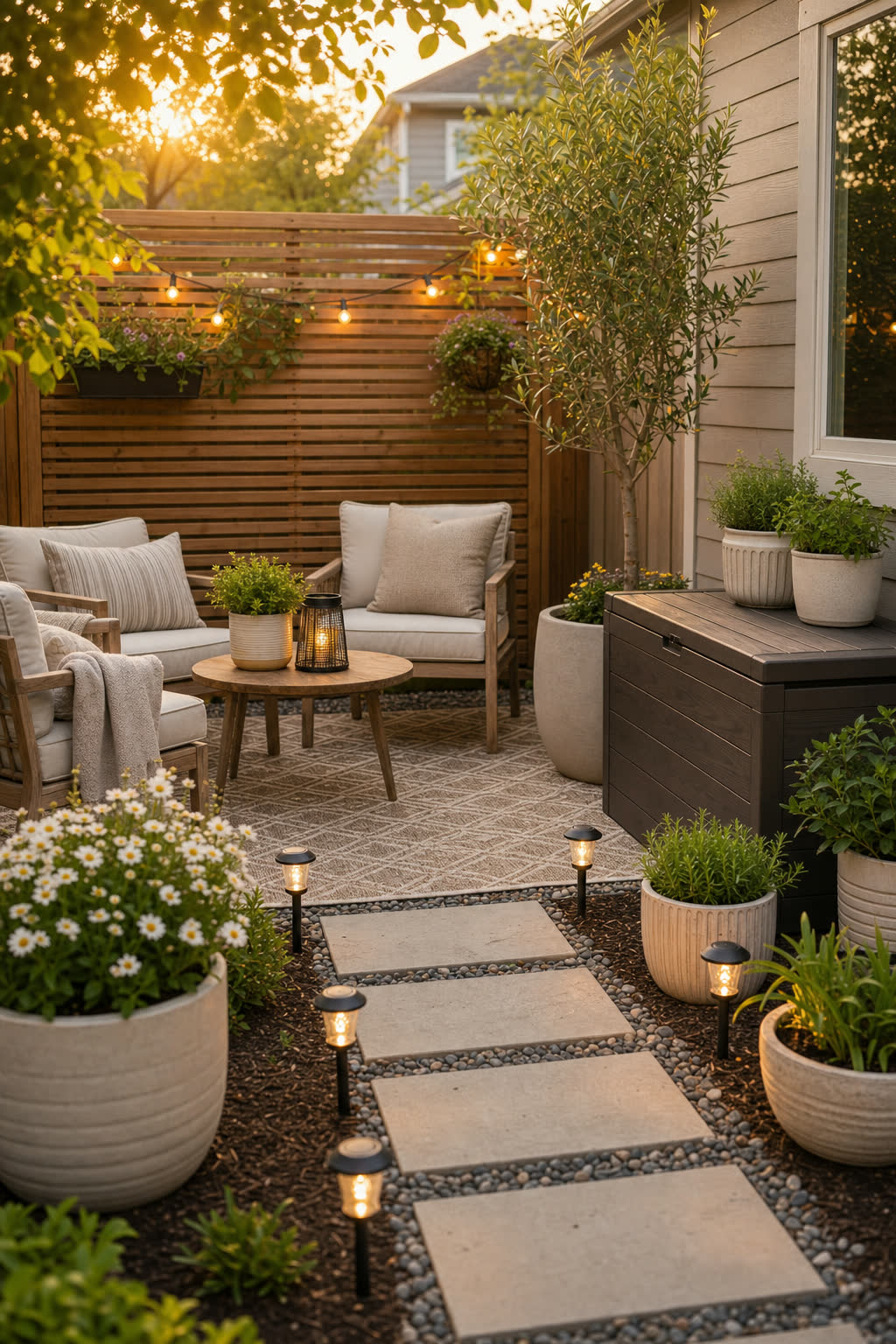
Start with the problem
Make your small yard easier to use.
Pick the problem you want to solve. We'll show you what to measure, which options fit a small space, and when a product is not worth buying.
One problem. One next step.
What is stopping you from using the yard?
Choose the job, then take the measurement that decides your next step. You do not need a product list yet. If water is reaching the house or a structure is unstable, address that problem before decoration or storage.
No account needed. Your choice is not sent to a retailer. Prefer no tool? Choose a problem below; those links work without JavaScript.
Keep a five-line plan before you shop
1. Keep a real route open
Walk from the door to the gate, tap and bins. Carry the widest object you normally move. Measure between the actual obstructions with doors and gates open. A route that fits an empty person may fail with a cart, bin or watering can.
2. Price only the area being changed
A 12 × 18-foot yard does not require 216 square feet of new material. A 12 × 2-foot planting strip is 24 square feet. Mark the zone first, check the existing depth, then calculate only the additional material.
Your five-line yard decision card
Copy these prompts into your own notes or print this section. Keep the note beside any product dimensions you compare. No account or email is required.
Wet ground: do not start with gravel
Photograph the area during or after rain and note where the water comes from and goes. A dry-looking surface is not proof that the underlying route is fixed. Keep house, boundary and outlet questions separate from product shopping.
Use the one-storm observation worksheet. It explains when the problem needs site-specific help instead of another bag of gravel.
Storage: compare the opening, not just capacity
List what must fit: cushions, hand tools, long handles or a machine. Measure the longest and widest item. Then measure the storage opening and the path left with the door or lid open. A larger capacity can create a worse daily route.
Choose box, cabinet, rack or shed by the job. Skip buying if moving or drying the items solves the actual problem.
Privacy: block the view from the chair
Sit where you will use the space and mark the exposed sightline. Compare screen height only after checking the base, wind and permitted anchoring. A taller panel is not automatically stable, and a screen that blocks the only path has not solved the layout.
Measure the view and screen footprint. The guide separates small sightline fixes from full-boundary privacy.
New yard: choose what to observe, not what to buy
Keep usable furniture and healthy plants while you learn the yard. Record sun, water, access and recurring chores. Do not remove plants you cannot identify or assume a previous owner's empty bed has no seasonal growth.
Start a 30-day yard log. Move faster on hazards, but let reversible layout tests come before permanent purchases.
What these tools cannot decide: safe structural loads, electrical work, drainage permissions or universal accessible-route requirements. Product instructions and local site rules still apply. We use source-linked planning guidance, not invented personal tests; read our method.
Choose your problem
What would make your yard easier this week?
Already know the job? Open one guide for its measurements, options and limits. For planting, lawn care and seasonal jobs, browse all 21 guides.
The full library
Looking for another yard job?
Browse the full library when you need help with tools, watering, storage, planting, or a weekend project.